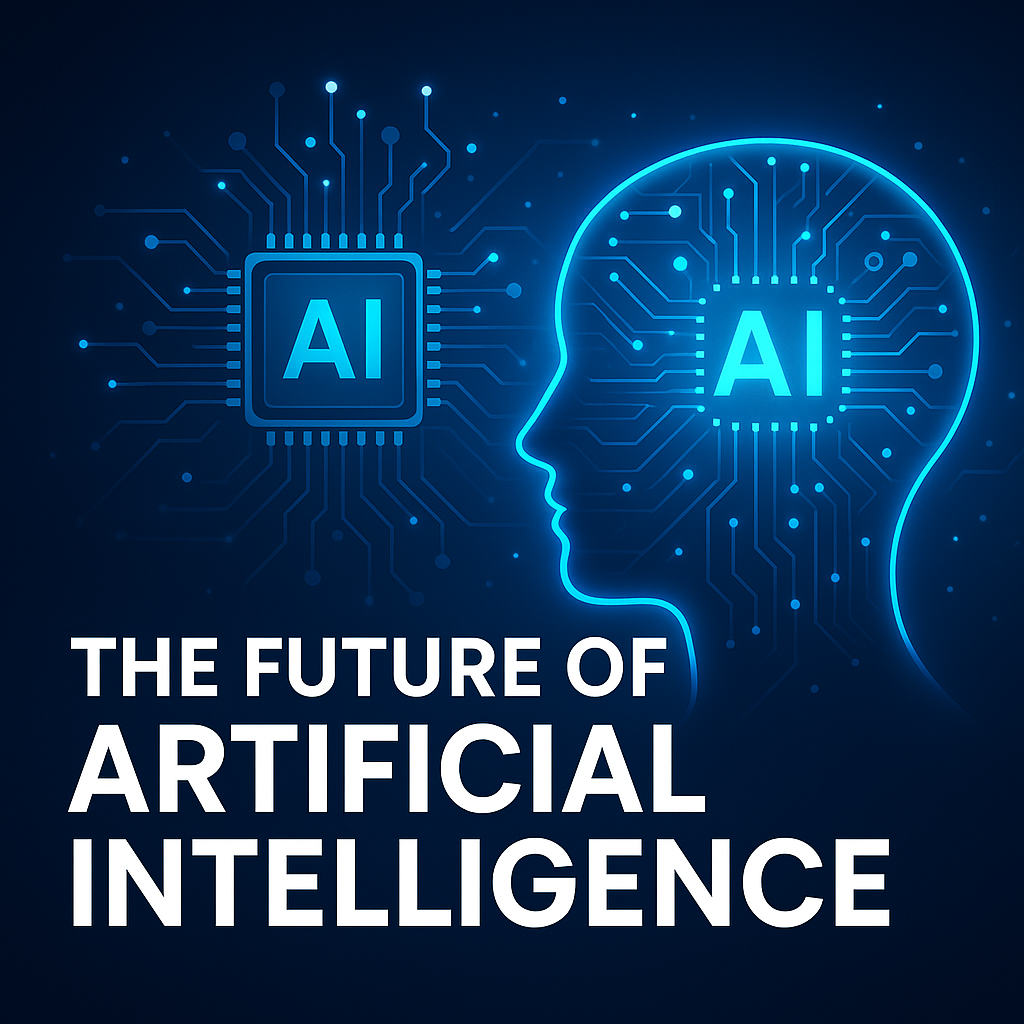
The Future of Artificial Intelligence: How AI Will Transform Everyday Life in 2025 and Beyond


Introduction
Artificial Intelligence (AI) is no longer a distant concept; it has become a core driver of modern innovation. From healthcare to business automation and personal productivity, AI continues to reshape our world. In 2025 and the coming years, AI will accelerate even faster—offering smarter tools, advanced automation, and new opportunities for individuals and organizations.
This blog explores upcoming AI trends, real-world applications, and how these innovations will influence daily life.
1. AI Will Become More Human-Like
AI models are becoming more conversational, emotionally aware, and context-driven.
Large Language Models (LLMs) like GPT-5 and beyond will be able to:
-
Understand human emotions in text and voice
-
Hold deeper and more natural conversations
-
Generate personalized learning and work experiences
-
Assist in decision-making with real-time insights
Impact:
Users will interact with AI as a digital partner rather than a tool.
2. AI in Healthcare: Early Diagnosis & Personalized Treatment


AI-powered systems are making healthcare faster and more accurate.
Key advancements include:
-
Early detection of diseases through imaging analysis
-
Personalized treatment plans tailored to patient data
-
AI chatbots providing 24/7 medical assistance
-
Predictive analytics helping hospitals manage resources
Impact:
Better patient outcomes, reduced costs, and faster medical services.
3. AI Will Transform Jobs & Workflows
Automation will dominate repetitive tasks, but new AI-related careers will emerge.
Examples of tasks AI will automate:
-
Data entry and documentation
-
Customer service with smart chatbots
-
Email sorting and scheduling
-
Report generation and analytics
New job roles created:
-
AI workflow engineers
-
Prompt engineers
-
Automation specialists
-
AI trainers & auditors
Impact:
Humans will focus on creative and strategic work, while AI handles routine processes.
4. AI in Education: Personalized Learning
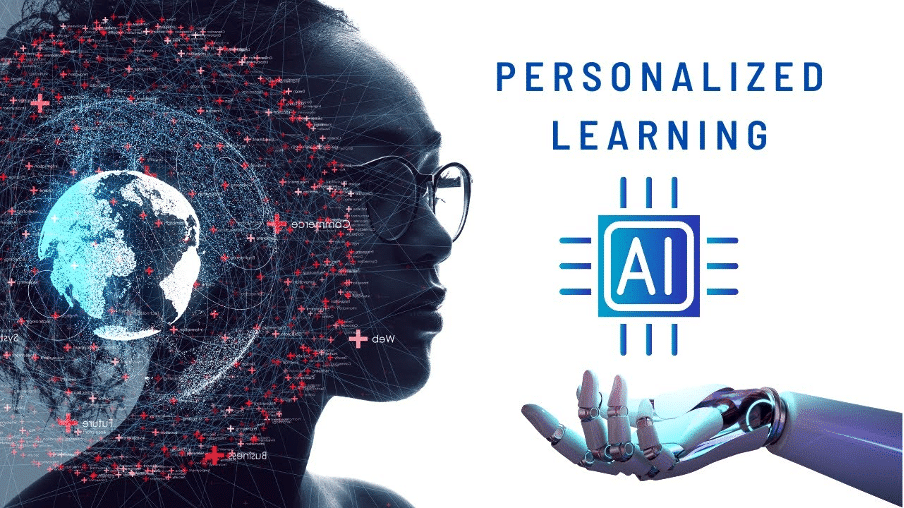


Education is shifting from traditional learning to adaptive, personalized experiences.
AI-driven features in modern education:
-
Adaptive learning paths based on student performance
-
Real-time feedback and explanations
-
AI tutors for difficult subjects
-
Automated grading and progress reports
Impact:
Students learn faster, teachers save time, and institutions improve efficiency.
5. AI Tools Will Dominate Digital Content Creation
Creators will rely heavily on AI for:
-
Blog writing
-
Video editing
-
Thumbnail generation
-
Social media automation
-
Script writing
-
SEO optimization
Impact:
Content production becomes faster, cheaper, and more professional.
6. AI in Smart Homes & Daily Life
Smart devices will be interconnected with intelligent AI assistants.
Daily AI use cases:
-
Home security monitoring
-
Personalized shopping suggestions
-
Voice-controlled tasks
-
Smart energy management
-
AI-based fitness and diet plans
Impact:
Homes become safer, more efficient, and more comfortable.
7. Ethical & Privacy Concerns Will Grow
As AI becomes more powerful, ethical boundaries will be crucial.
Key concerns:
-
Data privacy
-
Bias in AI decision-making
-
Deepfake misuse
-
Job displacement
Future Solutions:
-
Transparent AI systems
-
Global regulations
-
AI auditing frameworks
Case Studies: Real-World AI Applications
Case Study 1 — AI in Healthcare (Medical Imaging & Diagnosis)
A regional hospital introduced an AI-assisted imaging pipeline to improve radiology workflows. The AI system automatically scanned chest X-rays and MRI results, flagging potential abnormalities for fast-track review. Radiologists received flagged studies with confidence scores and highlighted regions of interest, enabling quicker prioritization of critical cases. This approach reduced reporting delays, improved detection accuracy, and helped prevent missed findings. Success depended on continuous clinician feedback, data validation, and a strict requirement for human approval before clinical action. The case demonstrates how safety-first AI integration strengthens healthcare without replacing medical professionals.
Case Study 2 — AI in Education (Personalized Learning Paths)
A school district piloted an adaptive learning platform for middle-school math. The system analyzed quiz performance and adjusted content difficulty automatically, generating targeted lessons for areas where students struggled. Teachers received dashboards with real-time analytics, recommended interventions, and alerts for students falling behind. This reduced teachers’ workload in creating individualized lessons and improved student engagement through personalized learning. With strong privacy policies, curriculum alignment, and ongoing teacher input, the platform acted as a valuable assistant rather than a replacement for classroom teaching.
Case Study 3 — AI in Content Creation (Editorial Workflow Automation)
A digital publisher integrated AI into its content production workflow. Writers used AI to generate topic outlines, headline variations, and sample images, while editors relied on AI for fact-checking suggestions and SEO optimization. A human-in-the-loop policy ensured all AI draft outputs were reviewed and refined. A documented style guide and mandatory fact-checking process maintained quality. The result was faster publishing cycles, reduced production costs, and improved search performance due to optimized keywords and structured content. The case shows how small teams can scale output using AI without compromising editorial standards.
FAQ Question
Q1: What will AI look like in 2025?
A1: By 2025 AI will be more embedded, context-aware and conversational. Natural-language systems will better understand intent, tone and short-term context, enabling assistants that summarize meetings, draft documents, and automate routine decisions. Industry-specific AI (healthcare, education, finance) will be paired with domain data to provide practical recommendations rather than generic outputs. Expect most productivity tools to include AI features (drafting, image generation, analytics) that accelerate workflows while requiring human oversight for correctness and policy compliance.
Q2: Will AI replace human jobs?
A2: AI will not uniformly replace people; it will automate repetitive tasks and augment many roles. Routine jobs involving data entry, standard reporting, or scripted customer replies are most likely to be automated. At the same time new roles will appear — prompt engineering, model monitoring, data curation, and AI ethics/audit positions. Overall the net effect will depend on reskilling: people who learn to supervise, evaluate, and integrate AI tools will find growing opportunities.
Q3: Is AI safe for everyday use?
A3: AI can be safe when deployed responsibly. Safety depends on data governance, bias mitigation, explainability, and access control. Organizations should apply best practices — limit sensitive data used for model training, run bias and fairness checks, provide clear human review where decisions matter, and deploy monitoring for model drift and misuse. Regulation and vendor transparency (model provenance, training data summaries) will also increase trust for everyday applications.
Q4: How will AI improve healthcare in practice?
A4: AI will accelerate diagnostic workflows (image analysis, triage), support personalized treatment planning by combining medical history with up-to-date research, and power virtual assistants for patient engagement and remote monitoring. In hospitals, AI can optimize scheduling, reduce administrative load, and highlight high-risk patients earlier. When clinically validated and properly integrated into clinician workflows, these tools improve speed and consistency of care — but clinical validation and regulatory clearance remain essential.
Q5: How can small businesses adopt AI affordably in 2025?
A5: Small businesses can start with SaaS AI tools rather than building custom models. Use-cases include automated content generation (blogs, ads), customer chat automation, simple analytics for sales forecasting, and image or video editing tools. Begin with a single high-value task, monitor results, and iterate. Prioritize providers that offer data privacy guarantees and explain how outputs were produced. Start small, measure ROI, and scale the most effective automations.
Q6: What are the top risks when adopting AI — and how to mitigate them?
A6: Main risks are privacy breaches, biased outcomes, model errors, and misuse (deepfakes, fraud). Mitigation steps: limit and encrypt sensitive data; run bias and performance audits on representative samples; require human review for critical decisions; keep robust logging and monitoring; and implement access controls and usage policies. Additionally, require vendors to provide transparency about model training data and offer the ability to reverse or explain automated decisions where necessary.
Conclusion
Artificial Intelligence is shaping a smarter, more efficient future. Whether you are a student, developer, entrepreneur, or everyday user, understanding AI trends will help you remain competitive and benefit from emerging innovations.
AI is not just a tool—it is becoming a central part of human progress.