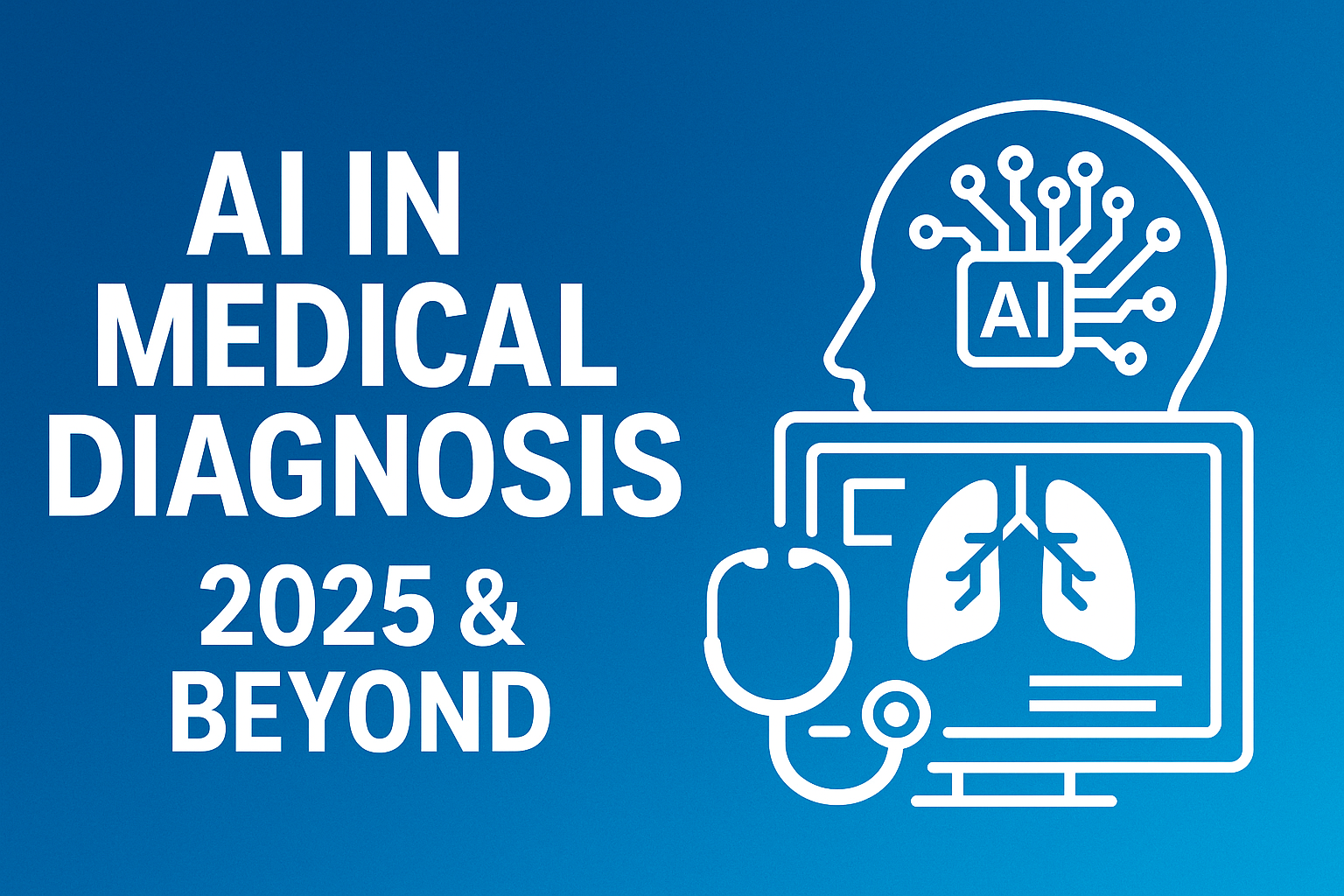
AI in Medical Diagnosis (2025 & Beyond): How Artificial Intelligence Is Saving Lives
Artificial Intelligence (AI) is transforming medical diagnosis by enabling earlier, faster, and more accurate disease detection. In 2025 and beyond, AI-powered diagnostic systems are becoming a core part of modern healthcare.
As part of the broader evolution described in the future of AI in healthcare, medical diagnosis is one of the most impactful use cases of artificial intelligence.
What Is AI in Medical Diagnosis?
AI in medical diagnosis refers to the use of machine learning and deep learning algorithms to analyze patient data, medical images, laboratory results, and clinical records to identify diseases and health risks.
- Analyzing X-rays, MRIs, and CT scans
- Detecting early-stage cancers
- Predicting heart disease and stroke risks
- Identifying neurological disorders
How AI Improves Diagnostic Accuracy
Traditional diagnosis relies heavily on human expertise. AI enhances this process by processing millions of data points in seconds, reducing human error and improving accuracy.
- Pattern recognition beyond human capability
- Consistent analysis without fatigue
- Early detection before symptoms appear
AI in Medical Imaging and Radiology
Medical imaging is one of the fastest-growing areas of AI adoption. AI systems assist radiologists by highlighting abnormalities and prioritizing urgent cases.
This technology plays a key role in the broader AI medical imaging ecosystem within healthcare.
Benefits of AI in Medical Diagnosis
- Earlier disease detection
- Faster diagnosis
- Reduced misdiagnosis rates
- Lower healthcare costs
- Improved patient outcomes
Challenges and Limitations
Despite its advantages, AI in diagnosis faces challenges such as data bias, regulatory approval, and explainability of decisions.
These issues are closely linked with AI ethics in healthcare and must be addressed responsibly.
Will AI Replace Doctors in Diagnosis?
No. AI acts as a decision-support tool, not a replacement. Doctors remain responsible for final diagnoses, patient interaction, and ethical judgment.
Future Outlook of AI in Medical Diagnosis
By 2030, AI-driven diagnostic tools will become standard in hospitals, clinics, and even home-based health monitoring systems.
Final Thoughts
AI in medical diagnosis is saving lives by enabling early detection and improving clinical accuracy. When combined with human expertise, AI creates a safer, more effective healthcare system.